

Small Seaside Garden Ideas For Windy Exposed Plots
Start By Reading The Wind, Not The Catalogue
Before you order a single plant, spend a week watching how the wind moves across your plot. On exposed coastal sites the prevailing south-westerlies tend to funnel through gaps between buildings, along paths and over low walls, so the fiercest gusts often hit a spot you would not expect. Notice where salt spray actually lands, where the soil stays damp and where it dries to dust within hours. A garden on a clifftop in Cornwall faces very different conditions from a sheltered estuary plot in Norfolk, and the planting that thrives in one will sulk in the other.
Dig a test hole about a spade deep and pour in a bucket of water. If it drains away within ten minutes you have the classic free-draining, sandy coastal soil that suits Mediterranean and seaside plants. If it sits there, you have a heavier ground that will need grit and organic matter worked in before anything but the toughest shrubs will settle.
Build Shelter Before You Build Borders
Nothing survives a gale in an open plot, so shelter comes first. The trick is a permeable barrier rather than a solid one. A solid fence or wall simply forces the wind up and over, then dumps it in a turbulent swirl on the other side. A porous barrier filters the wind, cutting its speed by half and leaving the garden behind it remarkably calm.
- Low hedging is the gold standard. Native species such as escallonia, griselinia, sea buckthorn and olearia cope with salt and clipping. Aim for a hedge roughly two-thirds the height of the shelter you want — about 1.2m to 1.5m is plenty for a small plot.
- Slatted or hit-and-miss fencing works well on boundaries where hedging is impractical, and it looks smart painted in a soft coastal grey or sage.
- Woven hazel or willow hurdles are ideal for temporary shelter while young plants establish, and they weather beautifully.
- Plant in tiers: a low front row of lavender or thyme, a mid-layer of shrubs, and taller wind-tolerant trees behind if space allows.
Give new hedging a deep soak every week through its first two summers. Sea winds strip moisture from leaves faster than roots can replace it, and even drought-tolerant plants need help while they knit together.
Gravel Beds And Free-Draining Planting
If your soil is thin, sandy or stony, do not fight it. Gravel gardens are made for coastal plots. They warm quickly, suppress weeds, hold moisture beneath the surface and set off silver and grey foliage wonderfully. Lay a 5cm to 8cm mulch of washed gravel or shingle over a bed improved with well-rotted compost, and plant through it.
Silver-leaved plants evolved for exactly these conditions: their hairy or waxy foliage reflects light and reduces water loss. Good choices for a small seaside plot include Stachys byzantina, sea holly, lavender, curry plant, santolina and the many hardy Artemisia. Mix in drought-tolerant grasses such as blue fescue and Stipa tenuissima for movement, and let them sway — that movement is half the pleasure of a coastal garden.
In heavier soil, raise the beds. A simple timber or stone-edged bed lifted 20cm to 30cm above ground level improves drainage dramatically and brings the planting closer to the eye, which matters in a small space.
Compact Perennials That Shrug Off Salt
Small plots need plants that earn their keep, flowering for months and returning year after year. These all cope with salty air, wind and free-draining ground.
- Sea thrift — tight pink pom-poms over neat cushions of foliage, perfect at a path edge.
- Erigeron — daisy-like flowers from early summer into autumn, and wonderfully wind-proof.
- Nepeta — soft grey-green mounds with lavender-blue spires, irresistible to bees.
- Sedum and sempervivum — for gravel, crevices and low walls, needing almost no care.
- Crocosmia and agapanthus — bold summer colour in a sheltered sunny corner.
- Hardy geraniums — reliable, low and generous, especially in the lee of a hedge.
Plant in the lee of your shelter rather than in the teeth of the wind, and group plants closely so they protect one another. A dense community of plants creates its own microclimate.
Sturdy Structures, Pots And Furniture
Anything lightweight will end up in the next county, so choose materials that can take a battering. Timber furniture should be teak, oak or another durable hardwood, and it is worth storing cushions indoors when not in use. Metal frames should be powder-coated rather than painted, as salt air attacks thin finishes quickly.
For containers, heavy stone, terracotta or thick glazed pots are far better than plastic. Choose wide, low pots — they are more stable in wind — and use a loam-based compost with added grit. Position pots against a wall or in a corner where they catch reflected warmth and sit out of the strongest gusts.
Windbreaks around a seating area make the difference between a space used twice a year and one used every fine day. A glazed or slatted screen on the windward side, even just 1.5m high, turns a bracing bench into somewhere you can sit with a cup of tea.
A Nod To Local History
Coastal gardens carry the memory of the place. Many seaside plots sit on old fishing quarters, boatyards or Victorian promenade gardens, and the plants that survived there did so for good reason. Traditional coastal plots often used fishing net floats, driftwood and beach-combed stone as decoration, and salvaged timber as edging. Reusing local materials — a length of weathered groyne timber, a few cobbles from the beach, a rope handrail — ties a new garden to its surroundings far better than any imported ornament. Just check local rules before taking anything from a beach or foreshore.
Combine tough planting, real shelter and a few salvaged details, and an exposed plot becomes a garden that feels generous rather than besieged — one that holds its own against the wind and looks better for it.


Coastal Interiors
-
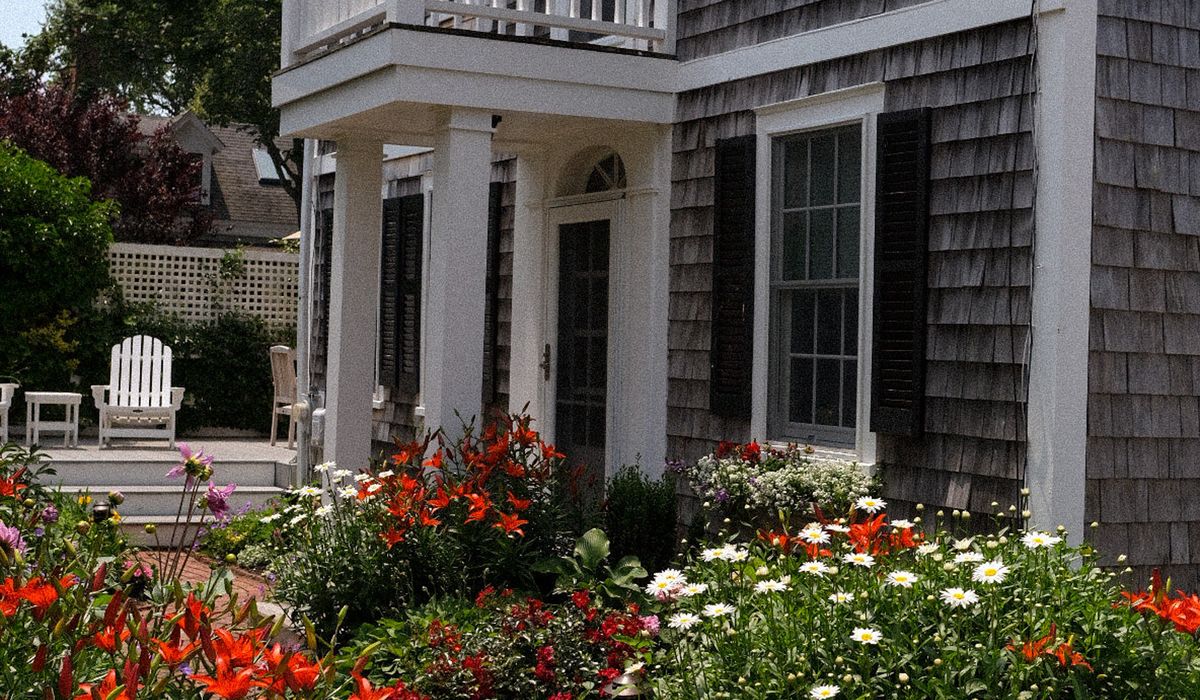
Salt-tolerant shrubs bring reliable colour to exposed front gardens. Choose hardy varieties like sea buckthorn, tamarisk and hebe for year-round structure and shelter.


Property




-

Long established fact that a reader will be distracted
-

Long established fact that a reader will be distracted
-

Long established fact that a reader will be distracted


Renovations
Karla Gleichauf
12 May 2017 at 05:28 pm
On the other hand, we denounce with righteous indignation and dislike men who are so beguiled and demoralized by the charms of pleasure of the moment
M Shyamalan
12 May 2017 at 05:28 pm
On the other hand, we denounce with righteous indignation and dislike men who are so beguiled and demoralized by the charms of pleasure of the moment
Liz Montano
12 May 2017 at 05:28 pm
On the other hand, we denounce with righteous indignation and dislike men who are so beguiled and demoralized by the charms of pleasure of the moment