

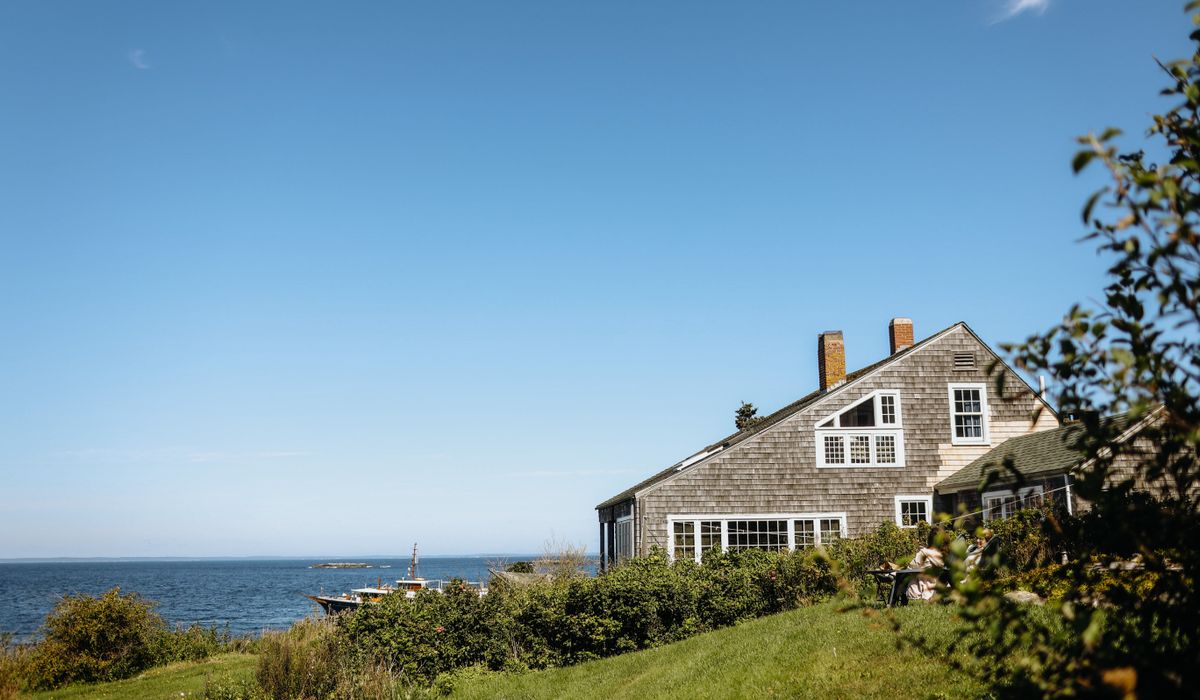
Choosing Weatherproof Paint For Coastal Cottage Exteriors
Why the Coast Is Harder on Paint Than Anywhere Inland
A cottage three streets from the sea lives in a different climate from one a mile inland. Airborne salt is the chief culprit. Crystalline chloride settles on render and timber, then draws moisture from the air into the surface long after the rain has stopped. When those crystals dry and re-form, they expand inside the pores of the substrate with enough force to lift a paint film from underneath. This is why coatings that looked perfect in April can be hanging in sheets by November.
Add to that wind-driven rain arriving almost horizontally at thirty or forty miles an hour, which can push water several millimetres into a porous wall. Add high ultraviolet levels on an exposed south-west elevation, which chalking and fading will confirm by the second summer. Add the freeze-thaw cycle on a frosty January night following a mild, damp afternoon. Then add the fact that coastal air rarely drops much below 80 per cent relative humidity, so surfaces stay cool and damp and dew lingers well into the morning. Any paint you choose has to cope with all of it at once.
Breathability Matters More Than Thickness
If you take one thing from this article, take this: the coating must be more vapour-permeable than the wall beneath it. Traditional coastal cottages are built of lime render, lime mortar, cob, stone or soft brick. They were designed to absorb driving rain and then dry outwards through evaporation. Seal the outside with a modern vinyl or high-build acrylic and you trap that moisture inside the wall. It has nowhere to go but inwards, which is how you get blown plaster, rotting lintels and damp patches that appear in the middle of a bedroom wall.
Look for products described as microporous or vapour-permeable, and check the vapour resistance figure where it is given. Mineral coatings, lime-based paints and most modern water-based masonry systems will let a wall breathe. Old-fashioned oil-based masonry paint will not. The general rule is simple: the outer coat should always be more permeable than the coat beneath it, and that coat more permeable than the render.
- Lime render, harling and lime mortar: limewash, potassium silicate or mineral paint.
- Modern cement render: microporous water-based masonry paint, ideally in a matt finish.
- Silicone resin paints: useful on very exposed or previously painted render, but they are less forgiving of trapped damp.
Matching the Finish to Render, Timber and Metal
Render and masonry on the coast want a matt, mineral finish. Limewash is the historic choice and remains excellent: it is highly breathable, cheap, and it wears away gracefully rather than blistering, so you simply recoat. Add a little tallow or linseed oil to improve water shedding on the most exposed walls. Potassium silicate paints are the modern equivalent, chemically bonding to the substrate and lasting considerably longer.
Timber cladding and joinery need a coating that moves with the wood. Board shrinks and swells across the seasons, sometimes by several millimetres, and a rigid film will crack along the grain. Choose a flexible, microporous wood stain or high-build woodstain rather than a hard polyurethane varnish, and treat end grain generously, since that is where water enters first. A borate preservative underneath is worthwhile on any softwood within a mile of the shore. Paints that are too dark on south-facing boards will blister as the surface overheats, so keep them light or mid-toned.
Ferrous metal is the other weak point. Cast-iron gutters, railings, hinges and brackets corrode fast in salt air. Strip rust back to sound metal, treat with a rust converter where pits remain, then apply a zinc phosphate or epoxy primer followed by a marine-grade topcoat. Galvanised surfaces need an etch primer or they will simply shed whatever you put on them.
Preparation and Application Conditions
Coastal paint rarely fails because the product was wrong. It fails because of what happened before the tin was opened.
- Wash down with fresh water to remove salt, then allow the wall to dry for at least a week in good weather.
- Check moisture content with a meter. Most coatings need masonry below 16 to 18 per cent and timber below 18 per cent.
- Apply when the surface temperature is at least 3°C above the dew point, and rising. Early afternoon is usually safest.
- Avoid spraying in wind and avoid painting in direct hot sun, which flashes off water-based coatings before they can cure.
- Work two or three thin coats rather than one thick one, and back-brush sprayed render to push paint into the pores.
Colour, Finish and Coastal Character
Local vernacular is worth respecting. White limewash, soft ochre, iron oxide reds, pale greys and muted blues have all earned their place on exposed British coastlines for practical reasons as well as aesthetic ones. Light colours reflect heat and reduce the stress on timber, while strong pigments such as iron oxide hold their colour better under ultraviolet than bright organic tints. Satin and eggshell finishes on doors and window frames are a sensible compromise: easier to clean and touch up than full gloss, but still wipeable against salt film. Full gloss looks wonderful for one summer and then dries dull; on the coast, plan for it.
Maintenance That Keeps the Weather Out
Seaside homes generally need recoating every three to five years, against eight to ten inland. Walk the building each spring and look for flaking edges, chalky patches, green algae on north faces and cracked mastic around frames. Clear gutters before winter, since overflowing water does more damage than any paint failure. Scrape back any loose material, feather the edges, spot-prime bare patches and recoat while the weather is still kind. It is far less work to renew a tired coat than to repair the render underneath it.


Coastal Interiors
-
Avoid anchors and striped overload. Use rope textures, weathered wood and soft blues to create a relaxed coastal living space with lasting appeal.


Property




-

Long established fact that a reader will be distracted
-

Long established fact that a reader will be distracted
-

Long established fact that a reader will be distracted


Renovations
Karla Gleichauf
12 May 2017 at 05:28 pm
On the other hand, we denounce with righteous indignation and dislike men who are so beguiled and demoralized by the charms of pleasure of the moment
M Shyamalan
12 May 2017 at 05:28 pm
On the other hand, we denounce with righteous indignation and dislike men who are so beguiled and demoralized by the charms of pleasure of the moment
Liz Montano
12 May 2017 at 05:28 pm
On the other hand, we denounce with righteous indignation and dislike men who are so beguiled and demoralized by the charms of pleasure of the moment